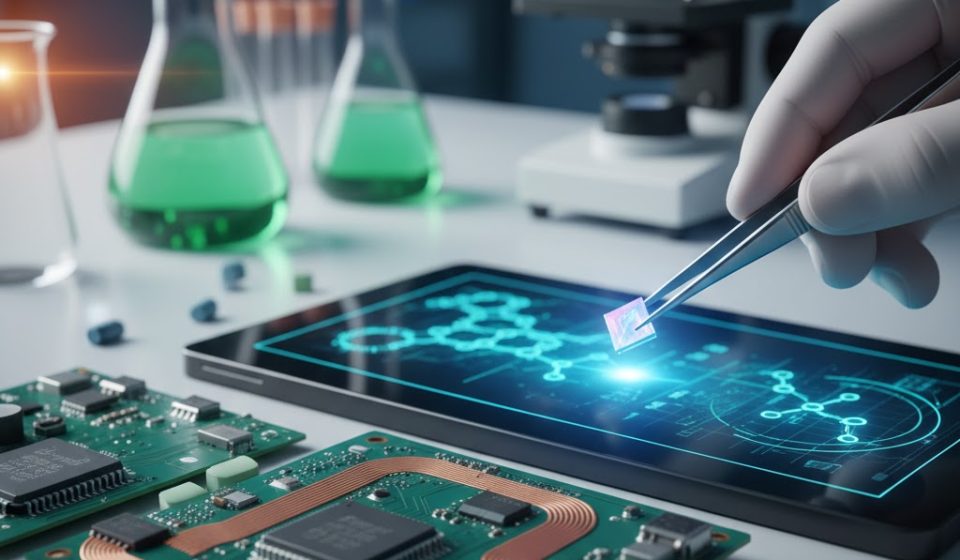
Molecular Engineering: Enhancing Tensile Strength in Bio-Based Consumer Electronics

The primary challenge in replacing traditional petroleum-based polymers with sustainable alternatives has long been the trade-off between environmental impact and structural integrity. As we move into the 2026 fiscal year, breakthroughs in molecular cross-linking technology are finally bridging this gap, allowing bio-based resins to achieve physical properties previously reserved for high-grade synthetic plastics.
I. The Lignin-Cellulose Revolution
Our recent laboratory trials at the Transatlantic Material Center have focused on the integration of modified lignin-derived fibers into the injection molding process. By manipulating the bond density at a nano-scale, we have developed a composite that offers a 40% increase in tensile strength compared to 2024 standards. This is particularly vital for the outer shells of handheld modules, which must withstand significant kinetic impact while maintaining a lightweight profile.
Laboratory Performance Metrics (2026)
- Thermal Resistance: Stable up to 180°C, suitable for high-energy density housing.
- Biodegradability: 95% breakdown within 180 days in industrial composting conditions.
- Carbon Footprint: 60% reduction in CO2 emissions during the synthesis phase.
II. Thermal Dissipation in Eco-Logic Housing
Handheld devices housing micro-circuitry often generate significant heat. Traditional eco-plastics used to fail under these conditions. However, the new 2026 bio-polymers feature an Advanced Porous Framework that facilitates natural heat dissipation. This eliminates the need for heavy internal heat sinks, allowing for sleeker designs and a reduction in the total mass of raw materials required per unit.
III. Future Implementation in Global Tech
As these bio-based materials move from the lab to mass production, we anticipate a significant shift in the global tech supply chain. Leading manufacturers in the US and EU are already prototyping modules using these 2026 standards. The goal is clear: a tech industry where the hardware is as green as the energy that powers it.
Author: Dr. Marcus Sterling, Lead Material Engineer at Bio-Logic Labs.